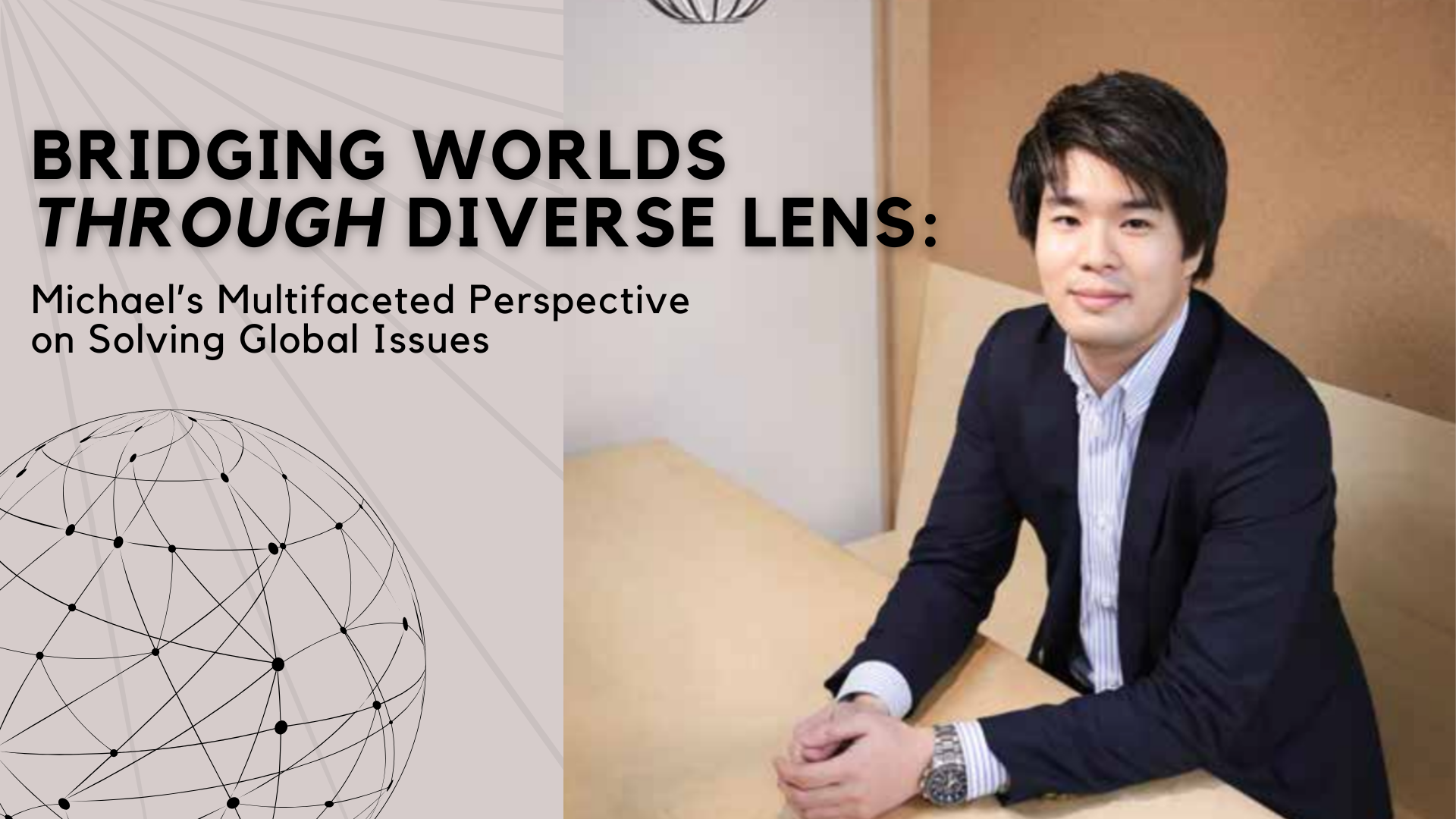
Bridging Worlds through Diverse Lens: Michael’s Multifaceted Perspective on Solving Global Issues
With Leave a Nest Group’s wide vision of “Advancing Science and Technology for Global Happiness”, the whole group hopes to create impact using cutting-edge research from the geographical front from Japan to America, and various verticals from agriculture and food to space. Hinged on this interdisciplinary background, it is imperative to shed light and emphasize the importance of being exposed to multiculturalist traditions, backgrounds, and perspectives. Being born in the US, raised in Italy, studied in the UK, and has worked both in Japan and Singapore, Mr. Shohei Michael Maekawa, one of the Directors of Leave a Nest Singapore, has successfully leveraged this background to become one of the Group’s pioneers in the Southeast Asian space.
Noticing the Differences and How to Approach Them
Even before joining Leave a Nest, Michael was able to notice the differences in perspectives, culture and people from the different countries he lived, studied and worked in. He recognized that these countries may just be a small part of the world, but it made him aware of the issues of different countries. His experiences also made him realize the need for different and more fitting solutions for the issues of each country. This realization developed into a mindset that became one of his foundations when he joined Leave a Nest. Through it, he was able to envision what Leave a Nest can do to expand to the world and become part of the people who could make it happen.
Multicultural Leadership: A Catalyst for Global Innovation at Leave a Nest
Mr. Shohei Michael Maekawa explained that their multicultural background directly influenced establishing Leave a Nest UK, as their understanding of the UK research environment enabled them to address challenges arising from Brexit—an initiative they wouldn’t have pursued without international experience. Rather than merely solving isolated problems, multicultural perspectives enable leaders to identify opportunities beyond domestic boundaries and take meaningful action. His multi-cultural knowledge is essential to Leave a Nest’s vision, as different regions require customized solutions that acknowledge local contexts and challenges. For Leave a Nest Singapore to fulfill its potential as a global knowledge hub, the organization recognizes the need for a distinctive leadership model characterized by cultural sensitivity, adaptability, and bridge-building capabilities. By nurturing “global leaders” who can leverage Singapore’s strategic position, Leave a Nest aims to facilitate knowledge exchange across diverse regions, ultimately strengthening its role in global knowledge manufacturing. This emphasis on multicultural competence reflects a fundamental understanding that in today’s interconnected world, the most effective leaders are those who can seamlessly navigate and connect different cultural ecosystems.
Commentary from the Nest
“I truly admire how Michael’s multicultural background and diverse national identity have shaped his personal and professional journey. Having the opportunity to grow up within different cultural environments has clearly given him a strong sense of identity and a broad perspective on life. This unique mix of cultural influences not only enriches his worldview but also equips him with the adaptability and insight needed to work effectively across various global settings. His experiences seem to have contributed to both his confidence and his ability to navigate complex, multicultural environments with ease. I find this particularly inspiring, as it highlights how deeply our cultural experiences can shape our career paths especially in LVNS global missions and values, and overall approach to life. It’s a reminder of how important cultural awareness and exposure are in developing a meaningful and distinctive personal identity.”
– Isabelle (Leave a Nest Singapore Pte. Ltd)


